Friday, 14 February 2020

Fish Keeper Fry Platies

We were all very excited in year 3 to welcome our next group of fish; four Platies. The children worked well together to balance the fish in the tank whilst they were still inside their bag - it is important to acclimatise the fish to their new tank.
They then tested the water and checked the results against the chart. This all gets recorded by the children on our log sheet.
The children then cut open the bag and released the Platies to meet the Zebra Danios.


Thursday, 13 February 2020

Fish Keeper Fry Zebra Danios

Year 3 are the proud owners of a tank and a selection of Zebra Danio fish!
The children have learned how to wash gravel, test the water levels and even plant the weeds ready for the fish.


Wednesday, 12 February 2020

Fish keeper Fry

Fish Keeper Fry - Year 3

Year 3 are excited to embark on our Fish Keeper Fry journey. We have signed up to Maidenhead Aquatic's Fish Keeper Fry's programme.
All the children will spend eight weeks setting up and looking after an aquarium with a variety of tropical fish being added over the programme. 

We will keep you updated with our journey here or you can view updates on Facebook and Instagram!

https://www.facebook.com/FishkeeperFry/

https://www.instagram.com/fishkeeper_fry/

Tuesday, 5 February 2019

Winter Grounds Day

Each year at Wicor we hold four seasonal grounds days a year, where all 436 children have the opportunity take part in gardening activities. With the whole school working outside the children have a hands on learning of their world and what is happening seasonally.

A focus is given for each of these days and this winter our focus was trees, the main activity being tree planting. This year we have been very lucky to be donated over 200 trees from The Woodland Trust and Carbon Footprint.

The idea of planting a tree for most would be to dig an enormous hole and plant a big root ball. The children were most excited to learn that the trees we were planting were small whips and at the very beginning of their life cycle. Comments were made about how they look forward to come back to school and see how their trees have grown in years to come.

As a result the care and love that went into the planting of our trees was infectious. Skills learnt included digging, planting, staking and mulching. This was overseen and assisted by many of our wonderful garden volunteers.

Because of the environmental work we take part in here at Wicor South Today, BBC Radio Solent and The Portsmouth News all wished to cover our news!

With our very own radio station and green screen here at Wicor the children were fascinated about themselves creating local news and having journalists and crew recording on site.


Tuesday, 22 January 2019

Inteview with Bianca Carr, Final Straw charity


We have a strong environmental curriculum through which children learn about their planet.  They learn to appreciate the amazing variety of life that occupies many of the beautiful and awe-inspiring areas of the Earth.  They learn about the damage humans are inflicting on their planet too. From time to time, we invite speakers in to talk to the children about the work they are doing to help protect and save our natural world.  

Bianca Carr founded her own charity, The Final Straw https://finalstrawsolent.org/ to try to reduce plastic pollution in the Solent and came in to share her work with the school in assembly.


Phoebe and Jessica showing off the school's plastic-free and palm oil-free soap to Bianca

Q. When did you first hear about plastic pollution?

A. I've always been aware that there has been a problem. In 2015 I became really conscious about it, about the time of the America's Cup. I was taught by 11th Hour Racing the full extent of the damage they had seen and ways in which we can help. they taught me all about the importance of refusing single use plastic. the work of Sea Bins and ways in which we can help by holding beach cleans for example. My mindset changed from being aware of it to it being so important I had to do something. No matter what you do there is always time to make a change.

Q. have you ever been abroad and seen the plastic pollution first hand?

A. I went to Bermuda with the America's Cup and the beach was beautiful with the pink sand and bright blue sea. But all around was lots of plastic, I lay on my sunbed and was surrounded by plastic nurdles. Even Bermuda a piece of paradise is covered in plastic.

Q. How are you going to change the world?

A. I am going to help the world, one plastic straw at a time. Educating people on the damage of using plastic straws and encouraging them to say no to them.

By Phoebe and Jessica, who care about their planet age 8 and 10.

"What you guys are doing at Wicor is just great.  Incredible.  What lucky children to come to a school environment like this.  It must have a positive effect on their attitudes."  Bianca.

Tuesday, 4 December 2018


Going back to the bar  #raisethebar

We are passionate about our planet and are increasingly concerned about the damage humans are doing to our environment and the wildlife that lives in it.
Over the last two years we have focused lots of time and learning on how we can help make a difference, by making even the smallest of changes.
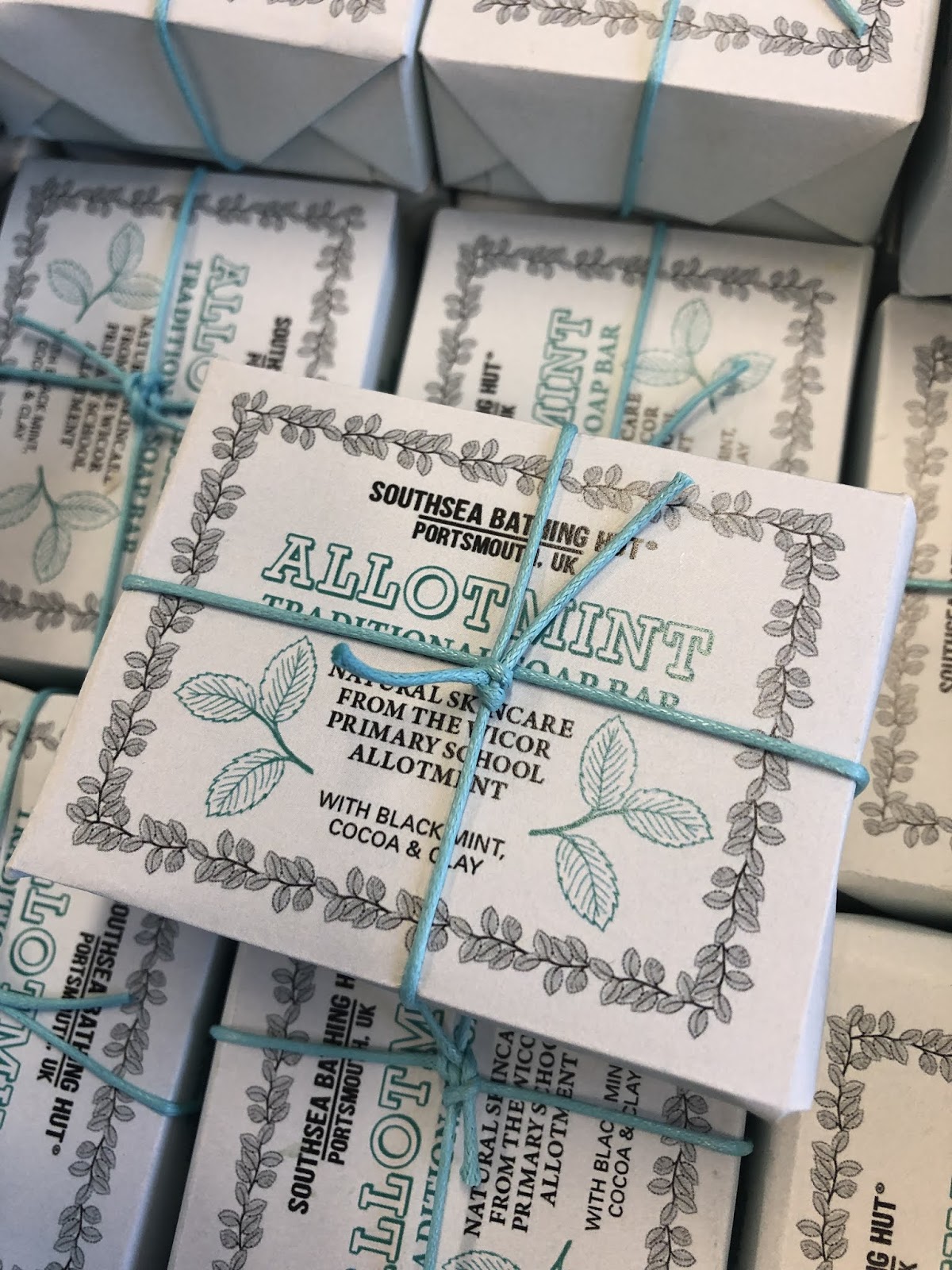
We wanted to educate our school and local community on how they could make every day changes and help fight the cause against plastic pollution. In bathrooms using liquid soap is the norm for so many now.  We decided a practical solution to this would be to encourage people to go back to the bar. What better way to do this than creating our own botanical bar of soap. 


Making the bar
Samanatha Worsey runs a local natural skincare company that works hard to be free from as much plastic as possible.  She came to Wicor to show us how soap is made. We had a workshop so we could learn what different oils and butter could go into our soap. The range included olive oil, cocoa butter, sea buckthorn oil and coconut oil and no palm oil!

Our main ingredient is black peppermint. We have grown kilos of this plant in our school allotment. We have been involved in every stage of the growing, taking cuttings, divisions, growing on, planting out and watering. Classes and volunteers have spent time harvesting, washing and hanging the mint to dry. 


The mint leaves have to be stripped from the stems in order for them to be dried and used through our soap.
In order to gain a zingy, fresh and minty aroma from our bar, one of our essential ingredients is glycerine. The glycerine is an ingredient that we have infused with our fresh mint straight from the gardens. We infused this by packing a Kilner jar a third full with mint leaves and then filled to the top with glycerine. The jars were taken round to each class in the school to be tilted 3 times daily over a 4 week period. During this time the leaves changed colour and we had to resist opening the jar!  
After testing these for their qualities Samantha worked to create us a beautiful bespoke recipe which was then tested by her cosmetic scientist.


The Bar
Year 6 were asked to create some design ideas for packaging our soap. They each put their thoughts on paper and a graphic designer pulled elements together to create a mint themed, beautiful wrapping that would appeal to a wide audience. Samantha already follows a strong ethos of using little or no plastic with her business. Her soap is wrapped with a wax paper and then with a strong paper wrap finished with parcel cord tie. This fits with our soap giving no waste at all. 

The bar after being produced needs to have at least 4 weeks to cure before being wrapped. As Samantha explained making the soap, saponification happens after the chemical process of mixing oils with an alkali and the soap will not be safe to touch until it has cured.

We decided on the name of Allotmint for our soap which contain lots of mint grown from our very own allotment!


Monday, 5 February 2018


Bangers and cash


A Hampshire primary school has donated £500 to the Woodland Trust that it raised from, among other things, a percentage of sales from a speciality sausage.
Wicor Primary School in Portchester devised the sausage with a local butcher using Jack in the Hedge, a garlic mustard that grows in the school grounds.
The school also raised the money through bake sales, sponsored events and the proceeds from a blend of tea devised with a Portsmouth tea merchant.
Headteacher Mark Wildman presented the money to Woodland Trust outreach adviser Luke Everitt after a day of tree planting.
The school received 179 free hazel, whitebeam, aspen and spindle saplings from the Trust as well as four larger trees – Oak, hornbeam and cherry.


Woodland Trust outreach adviser Luke Everitt (left) receives a cheque from Headteacher Mark Wildman.
Mr Wildman said:
“We have applied for the Woodland Trust’s free trees for schools packs in the past and enjoyed planting them but decided to take things a step further this year. Luke visited the school and we had a walk round deciding what could be planted where.
“Every child has helped plant one of the trees and it has given them a real sense of pride. I’ve seen many parents being dragged across a muddy field by their child saying “I planted that!”
“It’s given them a real connection with the environment. We have a very strong environmental curriculum. Eventually we’d like to have a specimen of every native tree in our grounds so we can create a living library.”
The school has created a hazel grove, the wood from which will be used for fencing, as firewood for its pizza oven and to sell to raise money for charity.
Luke Everitt said:
“We’re very grateful to the school for their generous donation. We will use it to fund further tree planting activity. The school has a beautiful site. It was a pleasure to be able to visit and advise on what would work best for them and to then help them get the whips in the ground.”
Mr Wildman added:
“We had some strong winds after we had planted and some of the whips were blown over. The children were really upset but got straight back out there to replant them. It’s taught them that the trees have a vulnerability and need looking after.
“We need to appreciate trees more. If any other schools are thinking about doing what we’ve done, I’d say do it. You might have to be brave and consider losing some of your fields but the expertise we received from the Woodland Trust was great. Trees are magnificent. We should all be planting more.”
Applications for free trees for schools from the Woodland Trust are now open for delivery in November.
To apply, or find out more visit www.woodlandtrust.org.uk/freetrees