Sunday, 20 November 2016

Deadly females

At this time of year there are lots of spiders around our grounds.


When we found a small spun mass we thought was created by a spider, we decided to learn a little more.


This is a cocoon spun by a female spider to protect her eggs. The male spider doesn't stay around for long for fear of being eaten! The spider that has laid this is a common garden spider 'Araneus diadematus'. Her size is approximately 18mm and she will swell up full of eggs before laying them in this cocoon.


She will eat butterflies, wasps and flies but won't eat smaller prey such as greenfly. A baby spider is called a spiderling.


Other common names for her include cross spider, European garden spider and garden orb-web spider.


The eggs look like mini ping pong balls.
Aimee and Abi Year 5

Saturday, 12 November 2016

Green tomatoes

Green Tomatoes


Tomatoes come in all shapes and sizes.
Some can be green, some can be lean and some look very mean!

Faye 5C


Green tomatoes can be used to make a lovely chutney, please try our recipe.

Tomato chutney
Makes 4 x 150ml Jars

600g green tomatoes, roughly chopped
1 large red onion,sliced
4 cloves garlic, roughly chopped
10ml olive oil
3 teaspoons chilli powder
250g soft brown sugar
300ml white wine vinegar
125g pitted dates, roughly chopped
3 tablespoons salt

Sprinkle the tomatoes with the salt and leave for around an hour. Pour off any excess juice. Put the onions and garlic with the olive oil in a saucepan and soften over a medium heat for about five minutes. Lower the heat, add the chilli powder and sugar and give them a good stir before adding the tomatoes. Pour in the vinegar and stir to ensure the sugar dissolves. Bring the mixture to the boil, then reduce to a simmer and stir in the dates. Simmer for about 40 minutes,stirring regularly and checking that it does not stick to the bottom of the pan. You will be able to see when it is cooked as it will be pulpy and have a hint of runniness. Allow the chutney to cool and then spoon into sterilised jars.

Enjoy!


Wednesday, 19 October 2016

What we love about Wicor grounds...

Chickens and Bees
"We are just so lucky that we have a wide variety of wildlife in our grounds including chickens and bees. Our chickens are very important to us and we sell their eggs to our local community."
Trinity


Wildlife

"At this school we grow varieties of plants that attract lots of different insects and animals. We also have an expert on plants and animals so we know when to plant the plants and how to work with them."
Jasmyn


Orchards
"I love the fact we have an orchard with 13 different varieties of apple trees. The smell of sweet fresh fruit is really strong in the autumn. When the apples are ready to pick we like to taste, cook and even sell them to our school community."
Eliza


Our allotment
"We are very lucky to have such a wonderful allotment at our school. In our allotments we grow lots of plants all from seed, so we can watch the whole of the cycle in which it grows. Our allotment is full of different types of plants. We love going outside and enjoying our allotment."
Aimee


Monday, 10 October 2016

Tasting the difference at Harfest

Year 5 were given a seasonal feast for the senses at this year's Harfest celebration, using pumpkins we had patiently watched grow from seeds in our allotment.


Our pumpkins

The talented head chef, Fergus Coyle, from Rick Stein's Fistral Beach restaurant in Cornwall arrived to give a demo of pumpkin risotto cooked alfresco in our new coastal garden.
Fergus Coyle explaining the workings of a risotto
We grew and harvested the pumpkin from our allotment. Ingredients for the recipe included arborio rice, mascarpone, sage, pumpkin puree, seeds and saffron which smelt very strong.

Eagerly we watched the cooking which took about half an hour. While this took place we had the chance to ask questions to Seb who is front of house at the Winchester restaurant ( Rick Stein, Winchester ). We learnt that that some Rick Stein's recipes are kept as classics on the menu as they are so popular. Most popular dishes include lobster and steak.

When the risotto was cooked lots of us loved the dish because the flavour of the pumpkin was delicious and the sauce was so nice. We really want to cook this at home after we have carved our pumpkins for Halloween.
Watching and waiting in the coastal garden


Monday, 3 October 2016

Our very own sausage. Part One

4M were given the exciting challenge of producing a 'Wicor' sausage using ingredients sourced from our grounds. Surveys were given to our staff and parents asking what their preferred ingredients are in a sausage. We extended our market research by conducting a sausage survey in Portchester village.

Our local award winning butcher Twell's kindly offered to produce our sausage and we had a chance to actually see him making sausages.The smell was meaty as we looked around the butchers .The machines were huge and weird because they were different to what we would expect them to look like in real life .

The sausage meat went into the top of the machine, the butcher pressed a button the meat shot out in casing in one long tube shape. To make the sausages into the right shape they were knotted by a method called knitting.


Ruby, Ellie      4M

Friday, 15 July 2016

Cool Coastal Garden

Class 5R and guests at the opening of the garden
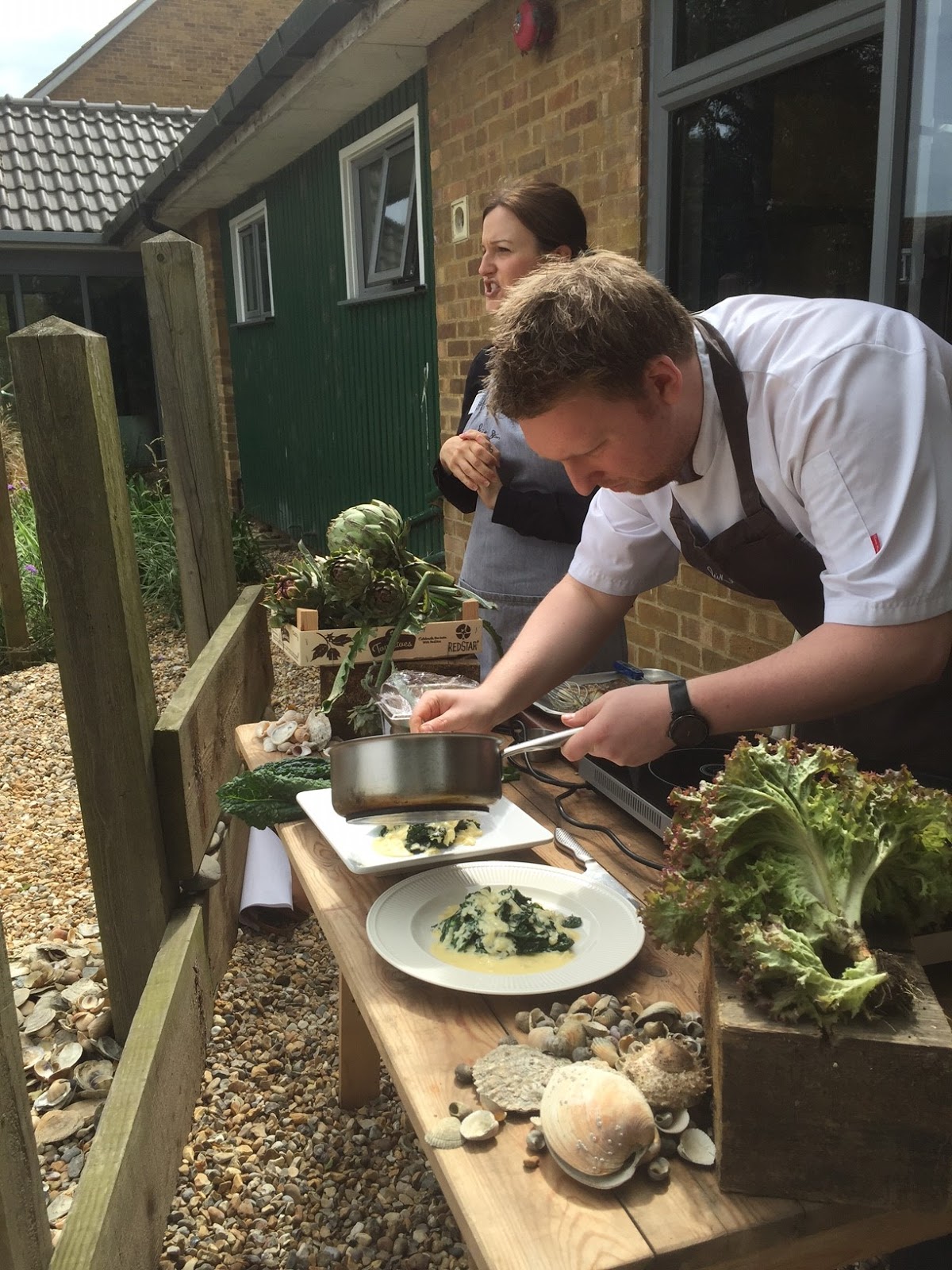
Two chefs from Rick Stein's came to join us on the day of the opening of our coastal garden. We were excited to see their alfresco cooking demo with a coastal theme, the delicious smell of hake and the peppery Spanish salad filled the air.


To create the dishes they used produce we had grown and harvested ourselves, the onion only being pulled moments before!

While they were cooking knowing we could try it are mouths started to water. When we tried it we all loved it, the mixtures of flavours gave it a great taste.

Fresh salad to accompany the fish

After that, we had Vincent, a landscape architect, who was a key part in the making of the coastal garden, cut the ribbon.

Vincent cuts the ribbon

A much appreciated fish 'n' chip lunch

Monday, 11 July 2016

Butterflies and beetles

We were looking for bugs in our school grounds in the wild flower meadow in the orchard
and we saw these butterflies: skipper, meadow brown, gatekeeper and marbled white.

The skipper is a short stout insects with shorter wings than most butterflies.  Their antennae end with thick hooks.  Skipper caterpillars are usually green or brown sometimes yellowish never brightly coloured.
A skipper butterfly in the orchard
Cerys dug out some facts about the marbled white butterfly.


1] A marbled white butterfly is black and white.
2] The marbled white is one of the most distinctive butterflies.
3] Marbled white butterflies live in long grass and plants.
4] A marbled white feeds on a wide variety of grasses.
5] A marbled white caterpillars are brown and green.
6] Marbled white butterflies are the only butterflies are the only black and white marking
7] The females have a slight brown tinge on the underside of their wing
8] Marbled white butterflies like sun bathing in hot weather.
9] The marbled white butterflies often is found in large colonies.
10] There are similar species to marbled white which come from Galatea in Spain and South France.

We also saw three different beetles: soldier beetle, swollen-thighed beetle and a two-spot ladybird.  Zoe found some information about the swollen thighed beetle.

The swollen-thighed beetle

1] Swollen-thighed beetles are a very common  in the summer and often found on bramble flowers.

2]Swollen-thighed beetles are a very hard creature to spot because they are very small about a centimetre long and camouflaged.


3]It is a feature of the males only so it may be some advantage when mating.


Tiny swollen-thighed beetle in our orchard
closeup of swollen-thighed beetle