Thursday, 11 February 2016

Keeping busy over half term

Looking for something to do over the half term holiday?  Well, it is national nest box week 14-21 February, so dust off the saw, nails and hammer and make a bird box for your garden.   There are lots of free instructions - different ones for different birds - on how to make them on the British Trust for Ornithology website (link below).  They also tell you on the best place to hang your bird box. 


http://www.bto.org/about-birds/nnbw

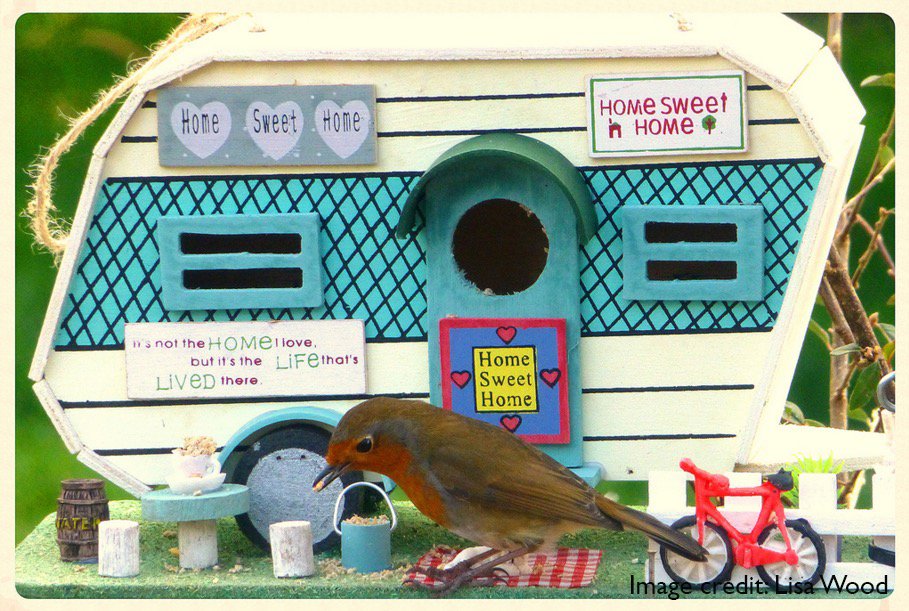
How about this one!  Perhaps you could make a wacky bird box.  Send us your pictures if you do!

Embedded image permalink
 

The Big Worm Dig


Worms matter.  In the words of Charles Darwin, “Without the work of this humble creature, who knows nothing of the benefits he confers upon mankind, agriculture, as we know it, would be very difficult, if not wholly impossible.” 
Year 3 children are taking part in the Big Worm Dig which is part of nationwide study launched by Riverford (http://www.riverford.co.uk/bigwormdig )  in conjunction with the University of Central Lancashire.

The Big Worm Dig site
The children have found a great many worms and learned that they are not 'all the same'.  However, they found more than just worms...
They unearthed this coin and after a bit of cleaning and a bit of googling they identified it as an old coin from Guernsey called a double.  This one was approximately the same valuable as an old penny.

If you want to find out more click on the link below. 


https://en.wikipedia.org/wiki/Guernsey_pound


Notice the spelling of Guernsey - it's French


In the news...

http://www.theguardian.com/wwf-education-partner-zone

Latest WWF education partner zone news, comment and analysis from the Guardian, the world's leading liberal voice

Wednesday, 27 January 2016

Wild Hedges for Urban Edges 2


Elder corner

The step over fruit trees a new addition to the orchard, ideal height for Year R to harvest.
 Lines of trees above and lines of boots below!


Wild Hedges for Urban Edges

January 2016 brought a very exciting event to us - a whole school tree planting in collaboration with the Tree Council. The Wild Hedges for Urban Edges initiative was designed to provide healthy and seasonal food to be harvested by communities and pupils from their local environment. At Wicor we aim to increase and extend the season we can harvest local food to source for our organic veg box scheme.

Over 100 native trees were planted during our winter grounds day with all 438 children taking part in the planting. Trees and hedgerow were planted in areas around the grounds, species include elder, hazel, hawthorn, blackthorn, oak and varieties of apple and pear.

The pupils were assisted by Jon Stokes of The Tree Council and his enthusiastic tree wardens and of course our own fantastic community gardeners.


Before the planting of our nuttery.
A sparse corner of the field ready for the elder grove.

Holes dug ready for the espaliers.

Tuesday, 8 December 2015

Hazel and Beans

Stripping hazel leaves
On Thursday last week we went to the woodland classroom and Mrs Bryant cut down some Hazel branches. She asked us to take off all of the leaves, it was hard work.


Underneath the leaves were new buds for next spring. All of the leaves that we removed we put into the compost bin.


We took the hazel sticks to the allotment and put them in the ground around our broad beans to stake them.


Ellie, Izzy, Blossom and Ruby 4M


Sunday, 8 November 2015

Sowing seeds in the wild flower meadow


On Monday 12th October class 4M began work with Mrs Bryant to create areas of wildflower meadow. To start with we went to the shed to get the tools we needed such as rakes, string, sticks and pots. With the wheelbarrow loaded up we headed to the orchard.

We needed to prepare the ground so that the seeds would have the best chance of germinating. We did this by raking (scarifying) all of the dead grass from the surface of four large areas marked out with string and sticks topped with pots.


Using the rakes was hard work and some of us found it easier to use our hands! The grass that we pulled out was put on top of our haystack. The haystack was steaming as it was warm inside, we got to jump up and down on it and it felt bouncy like a mattress because of all of the air inside.

The ground is ready for seeding
Next we all had handfuls of native wildflower seed that we scattered on our marked out areas, there were lots of funny shapes and different coloured seeds. We predicted they would take 3 weeks to germinate. Our school want to have meadows to encourage pollinators.


When we came back from our half term holiday we could see that our seeds had started to germinate.